If you have shopped for an electric two-wheeler in the last year, you have almost certainly seen a brochure quoting 120 km, 150 km or even 180 km on a single charge. Then a neighbour or a colleague, riding the same model, tells you they get closer to 70 km. That gap is the entire story of electric scooter real range in India: what the certificate says, and what actually shows up on the dashboard after a week of commuting through Bengaluru traffic or a Mumbai monsoon. This guide breaks down where the difference comes from, how riding style, battery health and load reshape the number, what charging really costs in Indian conditions, and how to test range for yourself before you commit to a purchase.
What Manufacturers Claim vs What Riders Actually Get
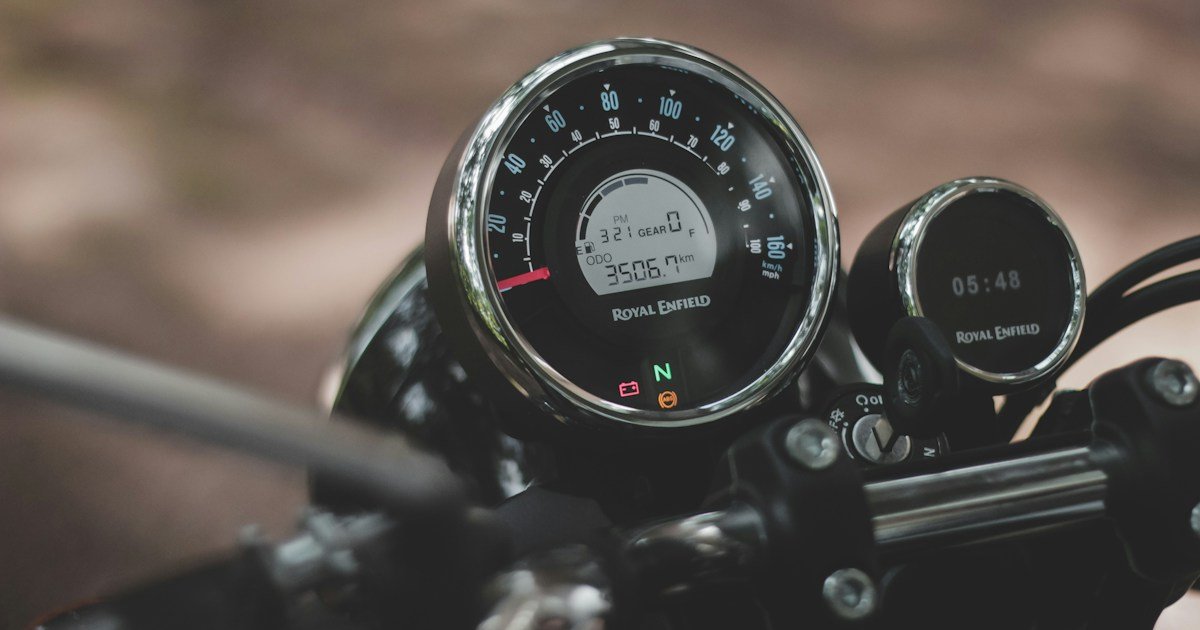
Almost every electric scooter sold in India carries an IDC or ARAI-certified range figure, generated under a controlled indoor-cycle test by the Automotive Research Association of India. The test uses a steady speed profile, a fixed rider weight and no headwind, gradient or air-conditioning-equivalent load. It is a useful benchmark for comparing two scooters on paper, but it is not a promise of what the vehicle will do on your daily commute.
Owner-reported real-world figures across popular models tend to land 25% to 40% below the certified number. A scooter rated 121 km often delivers 75 to 95 km in Eco mode on a mixed city loop, and closer to 55 to 70 km if the rider spends most of their time in Sport with heavy acceleration. This is not a defect — it is the honest cost of moving a real person, on a real road, at real speeds.
Why the brochure number is not wrong, just narrow
Certification tests deliberately strip variables so results are repeatable across manufacturers. Rider weight, tyre pressure, aggressive acceleration, wind resistance above 40 kmph and regenerative-braking behaviour all sit outside the test cycle. When you add them back, energy consumption rises and range falls. That is why any credible review of electric scooter real range should quote a tested Wh/km number, not just a headline distance.
How City, Highway and Rider Load Change Real Range
Three variables dominate real-world energy use on an Indian electric scooter: average speed, stop-and-go frequency, and total load on the platform.
- Dense city traffic (18–25 kmph average): Frequent braking recovers energy through regen, but idling at signals with the display and headlight on still draws current. Real range is typically 80–95% of the Eco-mode figure.
- Flowing arterial roads (35–45 kmph average): Best-case zone. Steady throttle, mild regen, minimal aero drag. This is where scooters get closest to their claimed IDC number.
- Highway or flyover cruise (55–70 kmph): Aerodynamic drag rises with the square of speed. Range at 60 kmph can be 30–40% lower than at 40 kmph on the same charge.
- Rider + pillion + luggage: Every extra 25 kg of load raises energy consumption by roughly 5–8% on urban terrain and more on inclines. A solo 65 kg rider and a two-up 140 kg pair will see meaningfully different range on the same scooter.
If your daily route is a mix of stops, flyovers and traffic lights, plan your buying decision around a real-world range figure that reflects that mix — not the certified maximum, and not the worst-case highway figure alone.
The Real Impact of Riding Modes on Electric Scooter Real Range
Most Indian electric scooters offer three or four riding modes. The naming varies — Eco, Ride, Sport, Hyper, Warp — but the physics is the same: each mode caps peak motor torque and top speed, and adjusts throttle response and regen strength.
- Eco: Softest throttle, lowest top speed (typically 40–45 kmph), strongest regen. Delivers 90–100% of certified range on most models.
- Normal / Ride: Balanced. Top speed 55–65 kmph. Range typically 70–85% of certified.
- Sport / Hyper: Full torque and top speed. Range often 55–70% of certified, especially if the rider is holding wide-open throttle between traffic gaps.
Switching from Sport to Eco for even part of your commute — usually the last 15 minutes before you reach home — is the single most reliable way to squeeze extra kilometres from a charge without changing anything else.
Battery Health and Why Range Drops Over Time
A new lithium-ion pack in an Indian electric scooter loses capacity in two ways. Cyclic ageing comes from charge-and-discharge cycles: expect roughly 2–4% capacity loss per year with regular use, though heat and fast charging accelerate this. Calendar ageing happens whether you ride or not, and is dramatically worse when the pack sits at 100% state-of-charge in hot ambient temperatures — a common summer situation across most of India.

To protect your electric scooter real range over the long run:
- Charge to 80–90% for daily use; save 100% for days when you actually need the full range.
- Avoid parking a fully charged scooter in direct afternoon sun for hours.
- Try not to drain below 10% repeatedly; deep discharges shorten pack life.
- Use the manufacturer-approved charger. Aftermarket fast chargers can void the warranty and stress the cells.
After three to four years of typical Indian usage, a well-cared-for pack should still deliver about 80% of its original real-world range. That is the benchmark to look for in warranty terms, most of which today guarantee 70% capacity at 3 years or 30,000 km, whichever comes first.
Charging Time and Cost in India: The Full Picture
Charging cost is where electric scooters make their strongest case against petrol commuters. To ground the numbers, we use the average residential tariff and current retail petrol price published by the Petroleum Planning and Analysis Cell and state electricity boards.
- Typical scooter battery: 2.5 to 3.5 kWh
- Home charging cost per full charge at ₹8/kWh average tariff: ₹20–₹28
- Real-world range per full charge (mixed use): 70–90 km
- Effective running cost: ₹0.25 to ₹0.40 per km
By comparison, a 110cc petrol commuter delivering 55 kmpl at a fuel price of around ₹105/L costs roughly ₹1.90 per km — five to seven times more. The gap is even wider for higher-mileage users, which is why food-delivery riders and last-mile fleets have been the fastest adopters.
Charging time expectations
A 950W home charger typically takes 4.5 to 6.5 hours for 0–100% on a 3 kWh pack. Fast-charging stations, where supported (Ather Grid, Bounce Infinity, Hero Charge, Statiq, ChargeZone and others listed by the Bureau of Energy Efficiency), can push a pack from 20% to 80% in 45 to 90 minutes. Frequent fast-charging does age the battery faster; use it as a top-up, not the daily habit.
How We Test: A Repeatable Range-Test Methodology
Any range comparison worth reading has to describe how it was measured. Our test protocol, and the one we recommend readers use before big purchase decisions, is straightforward:
- Charge the scooter to 100% at ambient temperature between 25°C and 32°C, then rest for 30 minutes.
- Set tyre pressure to the manufacturer-recommended value.
- Rider weight standardised at 70 kg with a 5 kg accessory load.
- Run a fixed loop combining 40% dense city traffic, 40% arterial road, and 20% flyover/highway.
- Ride the loop in the mode being tested — Eco, Normal or Sport — without switching mid-run.
- Record kilometres travelled at the point where the battery indicator hits 5%, plus energy consumption in Wh/km from the display or a plug-in energy meter.
- Repeat on a second day; report the average.
Readers can replicate steps 1–4 for a shortlist of two or three scooters at dealer test rides — most dealers will allow a 20–30 km loop, and even a partial data point exposes wildly optimistic marketing claims.
Real-World Range Comparison of Popular Electric Scooters in India
The table below shows certified vs typical real-world range in mixed Indian city conditions, based on aggregated owner reports and independent test data. Prices are ex-showroom, indicative for early 2026, and vary by state.
| Model | Battery | Certified range | Real-world (mixed) | Ex-showroom (indicative) |
|---|---|---|---|---|
| Ola S1 Pro Gen 2 | 4.0 kWh | 195 km (IDC) | 115–135 km | ₹1,35,000 |
| Ather 450X (3.7 kWh) | 3.7 kWh | 150 km (IDC) | 95–115 km | ₹1,49,000 |
| TVS iQube ST | 3.4 kWh | 145 km (IDC) | 90–105 km | ₹1,58,000 |
| Bajaj Chetak 3202 | 3.2 kWh | 126 km (IDC) | 80–95 km | ₹1,20,000 |
| Vida V1 Plus | 3.4 kWh | 143 km (IDC) | 85–100 km | ₹1,10,000 |
The pattern is consistent: expect roughly 60–75% of the IDC number in mixed real-world use, and less in Sport mode with two-up riding.
Frequently Asked Questions
What is the real range of an electric scooter in India?
For most popular models with a 3.0–3.5 kWh battery, real-world range in mixed Indian city use is typically 70 to 100 km per full charge in Eco or Normal mode. Sport mode and highway cruising can drop this by another 20 to 30 percent.
Why is the ARAI certified range so different from what I get?
ARAI certification is measured on a controlled indoor cycle with fixed load, no gradient and no wind resistance. Real Indian roads add traffic, hills, headwind, temperature variation and rider weight, all of which raise energy consumption. The certified number is a fair comparison tool, not a real-world promise.
How much does it cost to charge an electric scooter in India?
At an average residential tariff of about ₹8 per kWh, a full 3 kWh charge costs roughly ₹20 to ₹28. That works out to ₹0.25 to ₹0.40 per kilometre — five to seven times cheaper than a petrol commuter of the same category.
Does using Sport mode really reduce range that much?
Yes. Sport mode raises peak motor torque and top speed, which increases current draw and aerodynamic drag above 45 kmph. On most scooters, running exclusively in Sport lowers real range by 25 to 35 percent compared with Eco.
Should I charge my electric scooter to 100 percent every day?
Not unless you need the full range that day. Charging to 80 to 90 percent for daily use, and only topping to 100 percent before longer rides, slows down calendar ageing and extends usable battery life by a year or more.
How long do electric scooter batteries last in India?
Most modern lithium-ion packs are warranted for 3 years or 30,000 km at 70 percent remaining capacity. With careful charging habits, real-world usable life is typically 5 to 7 years before a noticeable range drop.
Is fast charging bad for the battery?
Occasional fast charging is fine and is designed for by every major manufacturer. Daily fast charging in hot ambient temperatures accelerates capacity fade, so treat fast chargers as a top-up option rather than the primary method.
Can I ride an electric scooter in heavy monsoon rain?
Most India-market electric scooters are rated IP67 for the battery pack, which handles standard rain and shallow puddles. Deep waterlogging above the footboard is still risky and can void warranty; avoid known flood-prone stretches during peak monsoon.
How can I test the real range of a scooter before buying?
Ask for a 20 to 30 kilometre test ride in a mix of city and arterial traffic, in the mode you plan to use daily. Note the energy consumption in Wh/km on the display; multiply available battery kWh by 1,000 and divide by that number to project the real range.
Do electric scooters lose range in winter?
Yes, but less than in colder countries. In north Indian winters with lows around 5 to 10 degrees Celsius, expect a 5 to 12 percent temporary range drop until the pack warms up. Most of the country sees minimal winter impact.
Which electric scooter has the best real-world range in India?
As of early 2026, the Ola S1 Pro Gen 2 with the 4 kWh pack leads mixed real-world testing at 115 to 135 km per charge, followed by the Ather 450X 3.7 kWh at 95 to 115 km. Your actual figure depends on riding mode, load and route.
Conclusion: What Range You Should Actually Expect
The honest answer to how far will an electric scooter actually go in India is: about 60 to 75 percent of the number on the brochure, in mixed city conditions, on a well-maintained battery, ridden in Normal or Eco mode. That is still enough for the daily commute of the vast majority of Indian riders, at a running cost a fraction of petrol. The mistake is buying on the sticker number; the fix is testing on your own commute, understanding the modes, and treating the battery gently.
If you are close to a purchase decision, shortlist two or three models that match your daily distance with a comfortable margin, request extended test rides, and check owner-community range logs for your city. That is how you avoid range anxiety after the first week — and how you make sure your next scooter earns its place in your garage for the full 5 to 7 years it should easily deliver.