Walk into a showroom today and the motorcycles and scooters look different from what most riders bought a decade ago. The lines are sharper, the instrument panels are digital, and the braking and engine systems work in ways that would have seemed like a luxury in 2016. Many riders who bought a bike ten years ago and then came back to the market feel like they are shopping in a different world.
This guide explains how modern bikes differ from those of ten years back. It covers engines, safety, electronics, lighting, design, suspension, electric options, and the cost of ownership. If you are planning an upgrade, comparing models, or just curious about how far the industry has come, this overview will give you a clear picture.
Engines Are Cleaner, Smarter, and More Efficient
The most significant change under the seat is the shift from carburetors to electronic fuel injection. A decade ago, carbureted engines were still common in entry-level commuter bikes. Today, fuel injection is standard across most segments. A fuel-injected engine adjusts the fuel mixture using sensors, which means smoother throttle response, easier cold starts, and more consistent performance in changing weather and altitude.
Emission norms have also pushed manufacturers to rethink their engines. Stricter standards introduced in recent years required catalytic converters, better combustion control, and tighter calibration. The result is cleaner exhaust, but it also means engines are more complex than the simple units riders remember from a decade ago.
Efficiency has improved as well. Many modern engines use better combustion chamber designs, reduced internal friction, and optimized gearing. Some commuter models now deliver noticeably better mileage than their predecessors, even though they often produce more power. Engine tuning has become more refined, so the power delivery feels more linear and easier to manage in traffic.
Cooling is another area of change. Air-cooled engines remain popular in budget bikes because they are simple and inexpensive to maintain. However, many mid-range and premium motorcycles now use oil-cooling or liquid-cooling. Liquid cooling helps engines stay within a stable temperature range, which matters in heavy city traffic where airflow is limited.
Safety Features That Were Rare Are Now Standard
Ten years ago, safety equipment on bikes was minimal. Disc brakes were often limited to front wheels in lower-priced models, and drum brakes were still common at the rear. Anti-lock braking systems were mostly found on high-end motorcycles, if they appeared at all.
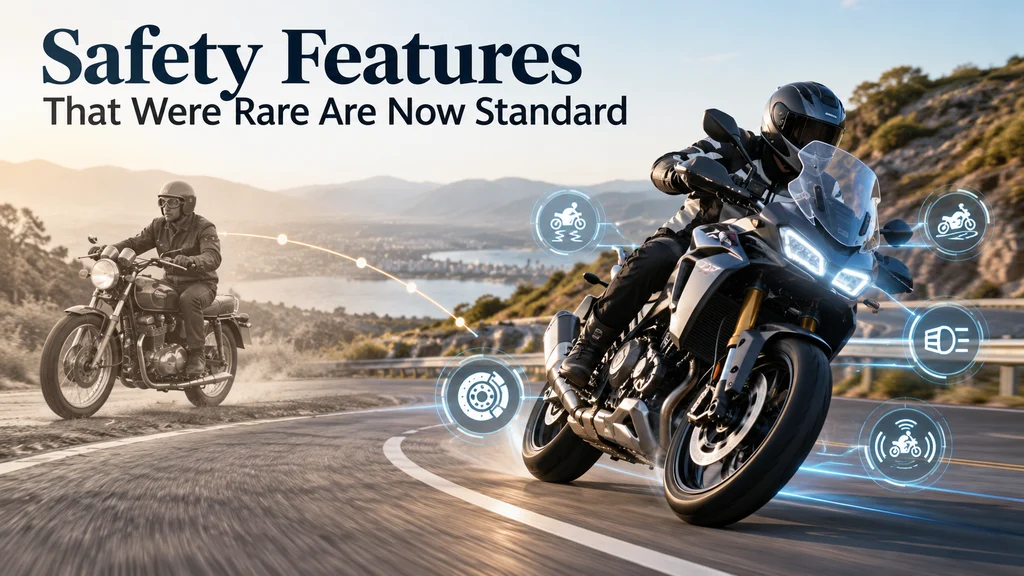
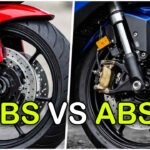
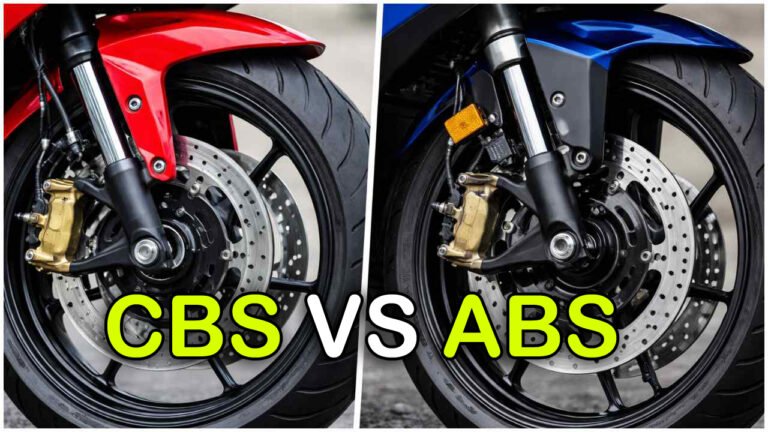
Today, braking has changed dramatically. Combined braking systems, which link front and rear brakes, are now widespread in many segments. Anti-lock braking systems have become much more common, especially on bikes with larger engines, and many riders now consider ABS a must-have feature rather than an expensive extra. Better brake pads, improved master cylinders, and higher-quality brake lines have also made braking more responsive and consistent.
Tyres have improved too. Tubeless tyres are now standard on many models, which reduces the risk of sudden deflation after a puncture and makes repairs simpler. Tyre compounds have also evolved, offering better grip in both wet and dry conditions.
Other safety features are increasingly common. Slipper clutches help prevent the rear wheel from hopping when downshifting aggressively, and some premium models now offer traction control and multiple riding modes. Engine kill switches, hazard lights, and better mirror designs have become more typical, making everyday riding safer.
Digital Instrument Clusters and Connectivity
The analogue speedometer and fuel gauge that dominated ten years ago have largely given way to digital displays. Modern instrument clusters can show speed, fuel level, gear position, trip meters, service reminders, and warning lights in a single screen. Many use LCD panels, while premium models feature full-color TFT displays with multiple layouts.
Connectivity is one of the biggest changes for everyday riders. Several manufacturers now offer Bluetooth integration that pairs a smartphone with the bike. Riders can receive call and message alerts, track navigation directions on the instrument panel, monitor ride statistics, and check service information through companion apps. Some models even provide GPS-based features such as ride logs and vehicle location tracking.
Charging options have also improved. A decade ago, mobile charging on a bike was rare and often required an improvised setup. Many modern bikes and scooters now include USB charging ports or dedicated sockets, making it easier to keep a phone powered on long rides or during daily commutes.
Ride modes are another addition. Some bikes now let riders switch between modes such as eco, rain, and sport. Each mode adjusts throttle response, power output, or traction control. This kind of flexibility was almost unheard of in mainstream bikes a decade ago.
LED Lighting Replaced Traditional Bulbs
Lighting has changed just as much. Ten years ago, most bikes used halogen headlamps, which were bright enough for basic riding but consumed more power and had shorter lifespans. Today, LED headlamps are common across many segments. They offer a crisper, whiter light, draw less power, and last considerably longer.
Daytime running lights, once limited to premium models, now appear on many mid-range and even entry-level bikes. These lights make a vehicle more visible in bright daylight, which improves safety in busy traffic. LED tail lamps and indicators have also become standard, and many use distinctive designs that give each model a more modern appearance.
Better lighting is not just about aesthetics. Brighter, more focused headlamps improve visibility at night and make it easier for other road users to notice a rider. For anyone who rides regularly in low-light conditions, the difference is significant.
Design, Build Quality, and Ergonomics
Modern bikes are designed with a sharper visual identity. Ten years ago, many commuter bikes looked similar, with rounded tanks, basic panels, and minimal styling. Today, manufacturers use bolder graphics, sculpted bodywork, and more deliberate color schemes. Even budget models often have a more polished appearance.
Build quality has also improved. Better fit and finish, tighter panel gaps, and higher-quality paint and plastics help bikes look and feel more premium. Improvements in frame design and manufacturing have made many modern machines more rigid and predictable in corners.
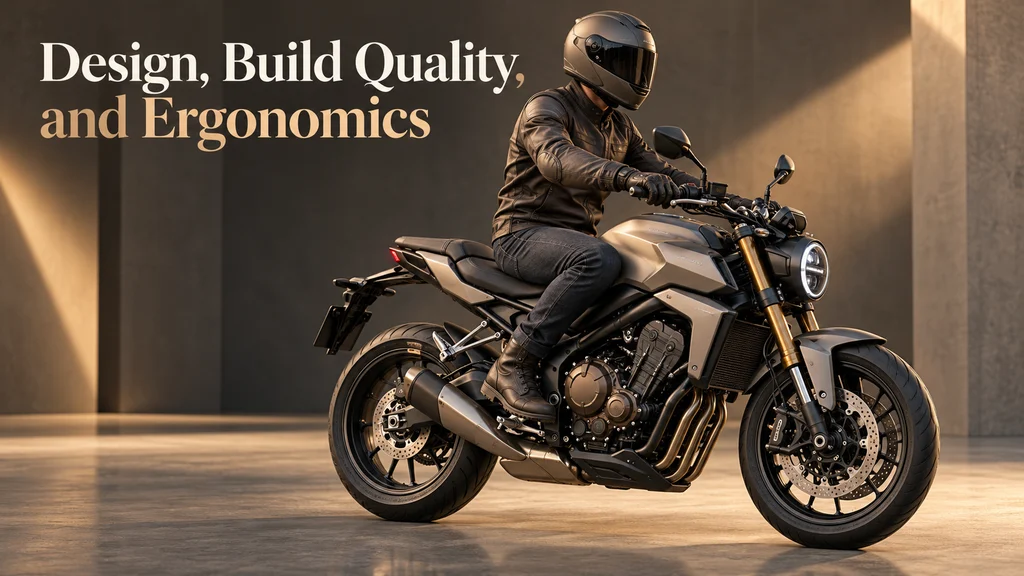
Ergonomics have been refined too. Seat heights, handlebar positions, and footpeg placement are often adjusted to suit a wider range of riders. Some manufacturers now offer multiple seat options or accessories that help tailor the bike to a rider’s height and riding style.
Weight management is another focus. Engineers use lighter components and smarter packaging to reduce weight without sacrificing durability. Lighter bikes are easier to handle in city traffic and more responsive in everyday riding.
Suspension and Handling Have Advanced
Suspension has improved significantly. A decade ago, many commuter bikes used basic telescopic forks at the front and simple twin shock absorbers at the rear, with limited adjustment. Today, upside-down forks appear on a wider range of models, offering better stiffness and more consistent handling under braking and cornering.
Rear suspension has also evolved. Some bikes now offer adjustable preload, which allows riders to change how the suspension responds to load, whether they ride solo or with a passenger. Better damping and spring rates improve comfort on rough roads, which is valuable in many Indian cities and towns where road conditions vary widely.
Improved handling also comes from better tyres and chassis geometry. Engineers have refined steering angles and wheelbase lengths to create bikes that feel stable at high speeds while still being agile in traffic. The overall effect is a more confident ride, especially for newer riders.
Electric Bikes and Scooters Have Entered the Mainstream
Perhaps the most dramatic change in the last decade is the rise of electric two-wheelers. Ten years ago, electric scooters and bikes were niche products, often limited by range, charging time, and build quality. Today, electric scooters and motorcycles are available from a growing number of brands, and many riders consider them a serious alternative to petrol-powered models.
Electric vehicles offer several advantages. They have fewer moving parts than combustion engines, which can mean less routine maintenance. They produce no tailpipe emissions and can be charged from a standard power outlet, though charging times vary by battery size and charger type. Running costs are often lower than petrol, especially for daily city commuting.
Battery technology has also improved. Modern lithium-based batteries typically offer better energy density, longer lifespans, and more consistent performance than the lead-acid batteries common in earlier electric models. Many electric scooters now include digital displays, Bluetooth connectivity, and app-based features that were rare a decade ago.
Of course, electric bikes still have trade-offs. Range, charging infrastructure, and upfront cost remain important considerations. Riders should compare battery capacity, real-world range estimates, charging time, and service support before buying. Still, the gap between electric and petrol options has narrowed considerably.
Ownership Costs Have Changed Too
The cost of owning a bike today is different from what it was ten years ago. Purchase prices have generally increased, reflecting better technology, improved safety features, and stricter emission compliance. Many buyers now spend more upfront, but they often get more features in return.
Maintenance has also changed. Many modern bikes have longer service intervals and better engine oil formulations, which can reduce how often owners need to visit a service center. However, fuel-injected engines and electronic systems may require diagnostic tools for certain repairs, so finding a capable mechanic matters more than it used to.
Insurance and resale value are worth considering as well. Bikes with ABS and other safety features may be easier to resell, since buyers increasingly expect these features. Strong brand reputation, availability of spare parts, and a well-documented service history also help maintain resale value.
Fuel economy is another factor. Many modern commuter bikes offer better mileage than older models, which can reduce monthly running costs for daily riders. When comparing bikes, look beyond the sticker price and consider fuel efficiency, service costs, insurance premiums, and expected resale value over several years.
What Has Stayed the Same
Not everything has changed. The basic fundamentals of riding remain constant. Balance, throttle control, braking technique, and situational awareness still matter just as much as they did a decade ago. No amount of electronics replaces good riding habits and proper protective gear.
Many traditional bikes also remain popular. Simple, lightweight commuter motorcycles continue to serve riders who want reliable transportation without extra features. Some riders prefer mechanical simplicity because it can make basic maintenance and repairs easier to handle on their own.
In other words, modern bikes have evolved, but they still serve the same core purpose: getting you from one place to another safely, comfortably, and affordably.
How to Choose a Modern Bike
If you are buying a bike today, start by defining how you plan to use it. Daily commuting, weekend touring, city riding, and highway cruising each favor different features. A commuter may prioritize mileage, low maintenance, and braking safety, while a touring rider may value comfort, storage, and suspension quality.
Next, check the safety features carefully. Look for ABS if it is available in your segment, and confirm the braking setup on both wheels. Review tyre type, lighting quality, and any rider aids such as traction control or slipper clutches.
Then consider technology. Digital displays, Bluetooth connectivity, and USB charging can make daily riding more convenient, but make sure the features are useful to you rather than just attractive on paper. Test the instrument panel in a showroom to see whether it is easy to read in sunlight.
Finally, look at total ownership costs. Compare purchase price, fuel economy, service costs, insurance, and resale value. Test-ride several models if possible, and pay attention to seating position, weight, engine smoothness, and brake feel. A bike that fits your body and riding style will serve you better than one that only looks impressive.
Frequently Asked Questions
Are modern bikes safer than bikes from 10 years ago?
In most cases, yes. Improvements such as better brakes, tubeless tyres, improved lighting, and available anti-lock braking systems have made modern bikes safer. However, rider behavior, protective gear, and road awareness remain the most important factors in safety.
Do modern bikes give better mileage?
Many modern commuter bikes offer better fuel efficiency than older models, thanks to fuel injection and improved engine design. Real-world mileage depends on riding style, road conditions, maintenance, and tyre pressure.
Is ABS necessary on a bike?
ABS helps prevent wheel lock-up during hard braking, which can improve control on wet or slippery surfaces. While not every rider needs it, many consider it a valuable safety feature, especially for daily commuting in heavy traffic.
Are electric bikes better than petrol bikes?
Electric bikes offer lower running costs, quieter operation, and no tailpipe emissions, but they may have limited range and longer charging times. The better choice depends on your daily distance, charging access, budget, and riding needs.
Do modern bikes cost more to maintain?
Maintenance costs vary by model. Many modern bikes have longer service intervals, but advanced electronics and fuel-injected engines may require specialized diagnostic tools. Choosing a model with good local service support can help keep costs manageable.
Final Thoughts
Modern bikes have changed a great deal over the past ten years. Fuel injection, better braking, LED lighting, digital instrument panels, connectivity, improved suspension, and electric options have transformed what riders can expect. The result is motorcycles and scooters that are safer, cleaner, more comfortable, and often more efficient than their predecessors.
At the same time, the fundamentals of good riding have not changed. Whether you choose a simple commuter or a feature-rich modern machine, the best bike is the one that fits your needs, your budget, and your riding style. Take time to research, test ride, and compare options before you buy, and you will be far more likely to choose a bike you enjoy for years to come.