Every year, hundreds of thousands of Indian riders find out the hard way that a bike’s ability to stop is more important than its ability to accelerate. Two systems dominate that conversation on two-wheelers today — ABS and CBS — and they show up on almost every new bike sold in India. If you are shopping for a bike or scooter and looking at the safety line on the brochure, understanding the practical difference between ABS vs CBS on bikes in India is the single most useful hour you can spend before signing a cheque. This guide explains both systems in plain language, shows the real stopping-distance numbers, breaks down single-channel vs dual-channel ABS, and helps you decide which system is right for your riding.
What Is ABS and How Does It Work on a Bike?
ABS stands for Anti-lock Braking System. In simple terms: it prevents your wheels from locking up when you brake hard, so you can keep steering and avoid a skid. On a bike, a wheel that locks under panic braking almost always leads to a fall — the tyre stops rotating, loses grip, and slides. The rider goes down before the bike stops.
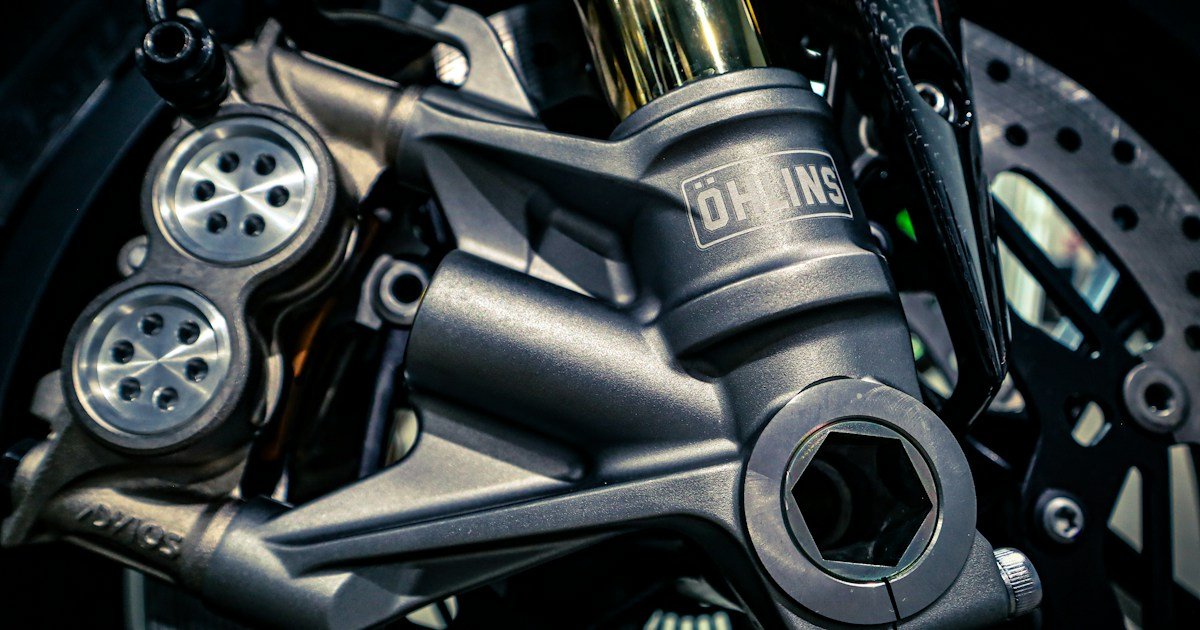
ABS uses a wheel-speed sensor at each ABS-equipped wheel. The moment the sensor detects a rapid loss of rotational speed (a sign the wheel is about to lock), the ABS module releases and re-applies brake pressure several times per second. You feel this as a mild pulse through the brake lever or pedal. The wheels keep spinning, the tyre stays gripped, and you keep steering.
ABS does not make you stop faster in every situation. It makes you stop in control, which for most panic-braking scenarios also translates to shorter stopping distances — especially on wet roads, loose gravel or during a sudden swerve. That control is the reason ABS has been mandatory on all new 125cc-and-above bikes in India since April 2019 under the Motor Vehicles Act rules notified by the Ministry of Road Transport and Highways.
What Is CBS (Combined Braking System)?
CBS stands for Combined Braking System. It is a simpler, cheaper safety technology mandated on all new sub-125cc two-wheelers in India from the same 2019 rule. Instead of preventing wheel lock, CBS distributes braking force between the front and rear wheels when the rider applies either brake lever.
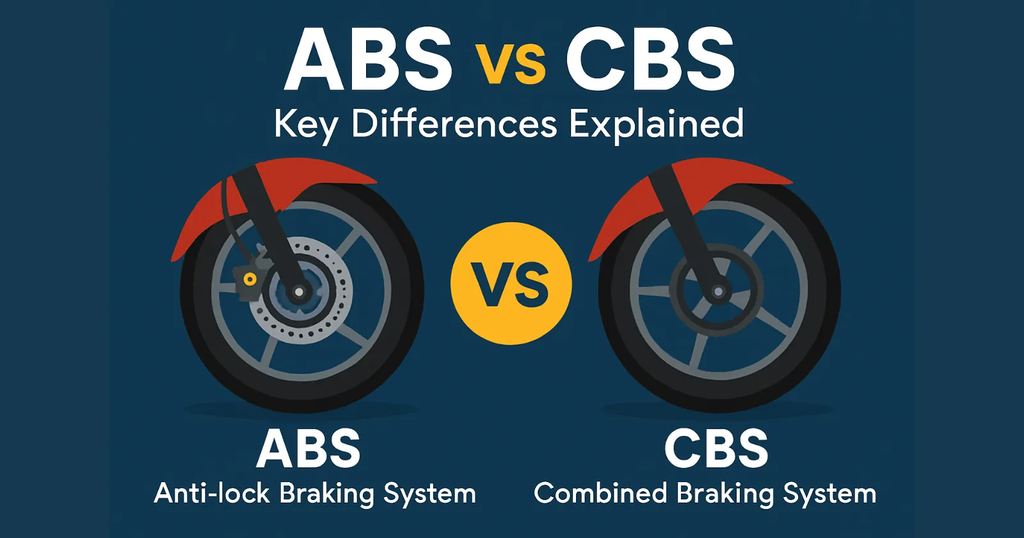
On a CBS-equipped scooter or small bike, squeezing only the rear brake also engages a proportional amount of front braking through a mechanical linkage. This matters because a huge percentage of Indian riders — especially new riders on 100cc commuters — brake almost exclusively with the rear (the left lever on a scooter, the foot pedal on a bike). Rear-only braking gives the longest stopping distances and the highest chance of a rear-wheel skid. CBS forces the front brake to contribute, which cuts stopping distance and improves stability.
CBS is not the same as ABS. CBS distributes brake force; ABS prevents wheel lock. A bike with CBS can still lock a wheel and skid; a bike with ABS almost cannot, in normal conditions.
Stopping-Distance Numbers: What the Data Says
Real-world testing by Bharat NCAP and Global NCAP shows the practical gap between the two systems on the same base bike, on the same road, ridden by the same rider.
| Braking system | Stopping distance from 60 kmph (dry) | Stopping distance from 60 kmph (wet) | Rear-wheel skid risk |
|---|---|---|---|
| Rear brake only, no CBS/ABS | 28–32 m | 36–42 m | Very high |
| Rear brake only, with CBS | 22–25 m | 28–33 m | Low |
| Both brakes, no ABS | 18–22 m | 26–34 m | Moderate (front-lock risk) |
| Both brakes, single-channel ABS (front) | 16–20 m | 22–28 m | Rear-lock still possible |
| Both brakes, dual-channel ABS | 14–18 m | 18–24 m | Very low |
The difference between a dual-channel ABS system and a rear-only-braked bike is 12 to 18 metres of stopping distance from 60 kmph. That is often the difference between stopping in your lane and hitting the vehicle in front. For anyone riding in Indian city or highway traffic, this number alone justifies the extra ₹6,000–₹15,000 that ABS adds to the on-road price.
Single-Channel vs Dual-Channel ABS
When manufacturers say a bike “has ABS”, they often mean one of two very different things.
Single-channel ABS
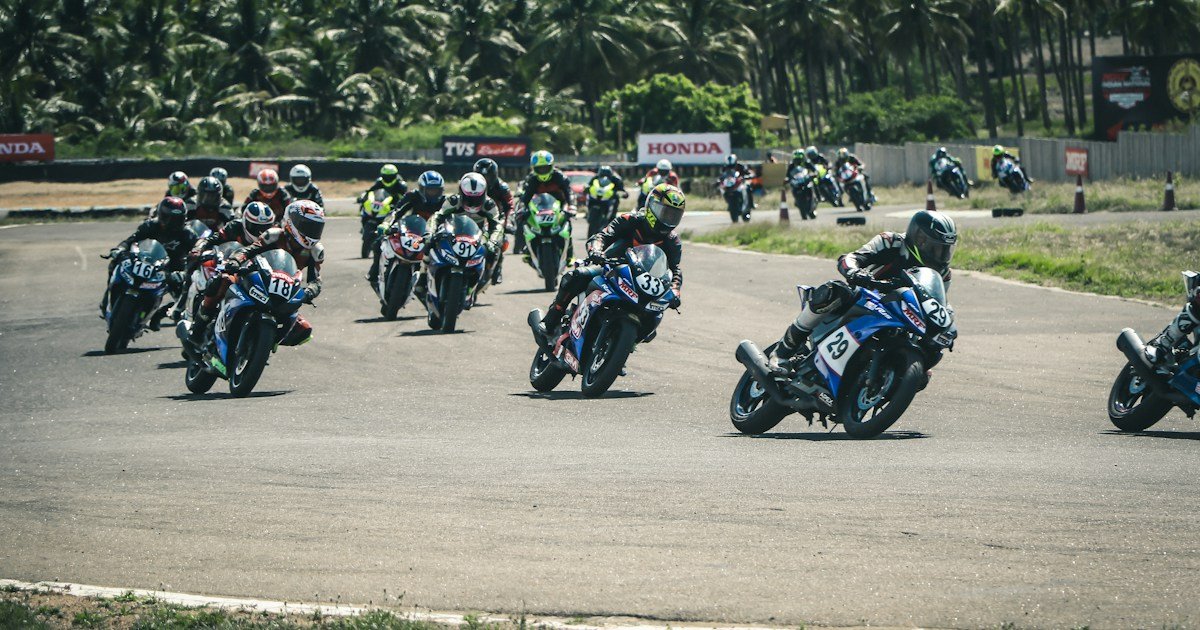
ABS operates only on the front wheel. This is the most common configuration on Indian 125–250cc bikes and premium scooters because it is cheaper and meets the letter of the mandatory-ABS rule. It prevents front-wheel lock (the most dangerous kind of lock, since a locked front wheel almost always means a fall). The rear wheel is unprotected — if you stomp the rear brake in panic, it can still lock and skid.
Single-channel ABS is a meaningful upgrade over no ABS. On a rider who uses the front brake as their primary stopper (as trained riders do), it works well.
Dual-channel ABS
ABS operates on both front and rear wheels independently. This is what you get on most bikes above 300cc, high-end 200–300cc bikes (KTM Duke 250/390, RC 200/390, TVS Apache RR 310) and premium scooters. Dual-channel ABS prevents lock on either wheel and is the closest a bike can get to “can’t-crash-braking”.
Dual-channel is roughly ₹4,000–₹8,000 more expensive than single-channel on the same platform, and it is worth every rupee for anyone who does regular highway riding, weekend touring, or urban riding in wet conditions.
Which System Suits Which Rider?
Match the safety system to your actual riding, not to the biggest number on the brochure.
- Daily commuter, sub-125cc scooter, mostly city: CBS is mandatory and adequate. Prioritise good tyres and helmet quality (see below) over trying to find non-existent ABS in this segment.
- 125–200cc bike, mixed city and occasional highway: Single-channel ABS is the sweet spot. Pay the premium; it may save your life once and pay for itself.
- 200–400cc bike, regular highway or weekend touring: Dual-channel ABS strongly recommended. Front-only ABS is a compromise you’ll regret on an emergency stop from 90 kmph.
- 400cc+ or performance bike: Dual-channel ABS is non-negotiable. Also look for ride-by-wire, cornering ABS on premium models, and traction control on 500cc+ bikes.
- Rider with less than 2 years’ experience: Prioritise ABS regardless of engine size. Beginner riders are the ones most likely to lock a wheel in panic — exactly the situation ABS was designed for.
The Tyre and Helmet Force-Multipliers
ABS and CBS both work through the tyre’s contact patch with the road. A worn or wrong-spec tyre limits everything the ABS module can achieve. The single biggest way to make your ABS more effective is to maintain your tyres:
- Tread depth minimum 1.6 mm (legal), but replace at 2 mm for wet-weather safety.
- Correct tyre pressure — check monthly. Under-inflation adds 3–5 metres to stopping distance.
- Age matters — tyres over 5 years old should be replaced regardless of tread depth.
- Use radial or bias-ply as specified by the manufacturer; mixing types affects ABS calibration.
Helmets are the other force-multiplier. Every year, the majority of Indian two-wheeler fatalities involve either no helmet or a substandard helmet. Look for BIS ISI-certified full-face helmets (mandatory in India for sale from June 2021), and replace any helmet that has taken an impact — internal EPS foam cannot recover, even if the shell looks intact.
The Buyer’s Safety Checklist
When you shortlist bikes, put this checklist beside the brochure. It takes a minute per model.
- Is ABS or CBS fitted? (Should be one or the other by law.)
- If ABS: single-channel or dual-channel?
- Front and rear disc brakes, or one drum?
- Tyre section width and construction — does it match the segment norm?
- LED headlamp with DRL and Auto Headlamp On (AHO)?
- Hazard-warning switch (useful in a breakdown or heavy fog)?
- Side-stand engine cut-off (prevents rolling off with the stand down)?
- Engine kill switch reachable from thumb position?
- Grab-rail for the pillion?
- Traction control (on bikes above 400cc)?
Not every bike will have every feature — that is why you compare. But if a bike misses on ABS or CBS in a class where the alternative is available, look at the next option in the same price band.
Current Rules and Regulatory Update (2026)
India’s two-wheeler safety rules are evolving fast. Key updates as of 2026:
- Existing rule (unchanged): ABS mandatory on all new bikes 125cc and above. CBS mandatory on all new bikes below 125cc.
- Proposal under active discussion: Mandatory dual-channel ABS on all new bikes above 250cc, with an expected effective date in 2027.
- HSRP number plates: Mandatory on all vehicles including two-wheelers, retro-fitted for older bikes in most states.
- Helmet standard: Only BIS ISI-certified helmets can be sold in India. Non-ISI helmets are banned for retail.
- Bharat NCAP for two-wheelers: A voluntary crash-test rating scheme for bikes is in development but not yet published for public results.
Buy against the direction of the regulation, not just against the current rule. A dual-channel ABS bike bought today will remain compliant if the 2027 rule is notified; a single-channel-only bike in the 300cc class may face a resale hit.
Frequently Asked Questions
What is the difference between ABS and CBS on bikes?
ABS prevents wheel lock during hard braking, keeping the bike stable and steerable. CBS distributes braking force between front and rear wheels when the rider uses only one brake. ABS is the more advanced safety system and is mandatory on bikes 125cc and above in India.
Is ABS mandatory on all bikes in India?
ABS is mandatory on all new bikes with engine capacity 125cc and above, per Motor Vehicles Act rules from April 2019. Bikes below 125cc must have CBS instead. Both apply only to new bikes sold after that date.
Is dual-channel ABS worth the extra money over single-channel?
Yes, for any bike above 200cc or if you ride regularly on highways or in wet conditions. Dual-channel ABS prevents rear-wheel lock as well as front, cutting stopping distance and skid risk significantly. The typical premium is 4,000 to 8,000 rupees.
Can I retrofit ABS to an older bike?
Practically, no. ABS requires wheel-speed sensors, ABS-specific brake calipers, an ABS control module, and dedicated wiring — all designed into the frame from the factory. Retrofit kits are not certified for road use in India.
Which is safer for a beginner rider — CBS or ABS?
ABS, by a clear margin. Beginner riders are most likely to lock a wheel in a panic-braking situation, which is exactly what ABS prevents. CBS helps with braking balance but does not stop wheels from locking.
Do all electric scooters in India have ABS?
No. Most electric scooters below 125cc-equivalent are fitted with CBS to comply with the sub-125cc rule. Higher-end electric scooters like the Ather 450X and TVS iQube ST offer single-channel ABS. Dual-channel ABS on electric scooters is still rare.
Does ABS work on wet roads?
Yes, and this is where ABS shows its biggest benefit. On wet or slippery surfaces, the wheels lock much sooner under braking, so ABS intervenes more often and prevents skids. Stopping distances on wet roads with ABS can be 20 to 35 percent shorter than without.
Can I turn off ABS?
Some premium bikes (KTM Duke, BMW G 310 R, Ducati Scrambler, Triumph Speed 400) allow ABS to be switched off, usually for off-road use. On mainstream Indian bikes, ABS is always active — you cannot disable it.
Does CBS reduce the need for ABS?
No. They solve different problems. CBS distributes braking force; ABS prevents wheel lock. A bike with only CBS can still lock a wheel and skid under panic braking, especially on wet roads.
How much does ABS add to the price of a bike?
Single-channel ABS typically adds 5,000 to 10,000 rupees to the ex-showroom price. Dual-channel ABS adds another 4,000 to 8,000 on top. Given the safety benefit, most Indian riders in the 150cc-and-above segment find the cost easily justified.
Should I buy a bike without ABS to save money?
No new 125cc-and-above bike sold in India can legally be without ABS since 2019. Used bikes from before that rule may lack ABS — factor a 15 to 25 percent price discount for the missing safety feature, and know you are trading real safety for savings.
Conclusion: Braking Beats Bragging
The ABS vs CBS bike India question is not about picking the cooler acronym. It is about matching the safety system to your engine size, your riding conditions and your experience. For anyone riding a sub-125cc scooter or commuter, CBS is what you get and it does its job well. For anyone on a 125cc-and-above bike, ABS — ideally dual-channel above 200cc — is the safety technology that has done more for Indian rider survival in the last five years than any other single feature.
Buy the safety. Maintain the tyres. Wear the helmet. Get comfortable using both brakes together. The gap between arriving home and arriving at a hospital, on Indian roads, is often exactly the difference these systems buy you.