Meta description: Compare chain, belt, shaft, and other drive systems on cars and motorcycles. Learn how each works, its pros and cons, common myths, and which option suits your riding or driving needs.
Every vehicle with an engine has to get power to its wheels, and the way it does this shapes how it feels to ride or drive, how much maintenance it needs, and how long it lasts. The drive system is the set of components that carries power from the engine or motor to the driven wheels. On a motorcycle, the most familiar options are chain, belt, and shaft drives. On a car, the drive system usually means the driveshafts, propeller shafts, and differentials that move power to the wheels. Understanding the differences helps you choose a better vehicle, maintain it properly, and avoid costly surprises. This guide explains what drive systems are, how the main types work, their pros and cons, which types suit cars or motorcycles, common misconceptions, and answers to frequently asked questions.
What Is a Drive System and Why Does It Exist?
An engine or electric motor produces rotation, but that rotation is usually at a speed and torque that are not ideal for the wheels. The drive system transfers that power and adjusts it where needed. It also allows the wheels to be placed away from the engine, which matters because the engine and the wheel rarely sit on the same axis.
Drive systems exist because vehicles need a reliable way to connect the power source to the road. Without one, the engine could not turn the wheels in a controlled, efficient way. A drive system also influences weight distribution, ride quality, noise, maintenance schedules, and cost, so manufacturers choose the layout that best fits a vehicle’s purpose.
How Drive Systems Work
Most drive systems share a few basic principles. Power leaves the engine through the gearbox, which selects the gear ratio. It then passes through a transmission element, such as a chain, belt, or shaft, to the final drive. The final drive applies a further ratio and delivers torque to the wheel.
On motorcycles, the rear wheel is usually driven by a sprocket on the gearbox output shaft. A smaller front sprocket and a larger rear sprocket create a reduction, so the rear wheel turns more slowly than the engine but with greater torque. Changing sprocket sizes alters acceleration and top speed, which is why riders sometimes adjust sprockets for their riding style.
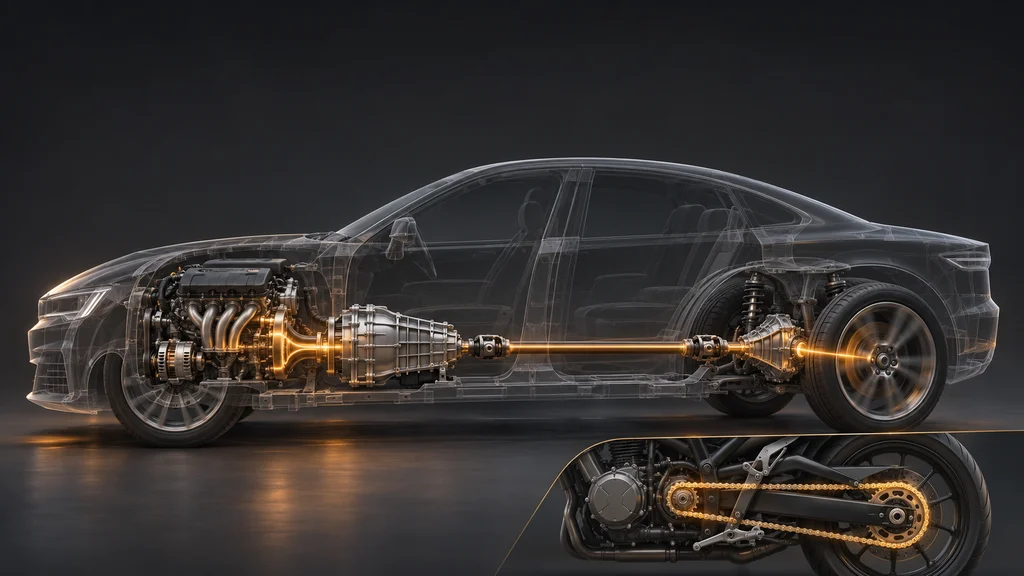
Cars use a similar principle with different components. In front-wheel-drive cars, the engine and transmission sit at the front, and driveshafts with constant-velocity joints carry power to the front wheels. Rear-wheel-drive cars use a propeller shaft running to a differential at the rear axle. All-wheel-drive systems add a transfer case or coupling to split power between the front and rear axles.
Chain Drive: How It Works
A chain drive uses a roller chain that runs around a front sprocket attached to the gearbox and a larger rear sprocket attached to the rear wheel. The chain’s rollers engage the teeth of the sprockets and transmit force. Because the system uses direct mechanical contact, it is simple and light.
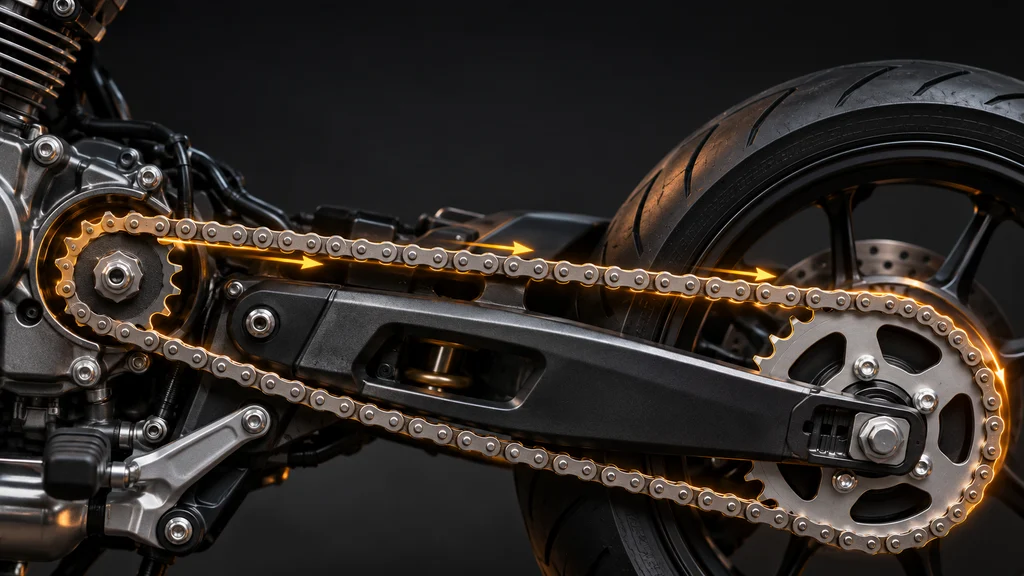
Chain drives are common on sport bikes, commuter motorcycles, and off-road machines. Modern chains often include O-rings or X-rings that seal in lubricant and keep out dirt, which reduces wear.
Advantages of chain drive:
- Lightweight and compact, which helps handling and weight distribution
- Efficient transmission of power, with minimal energy loss under normal conditions
- Easy to change ratios by swapping sprockets
- Relatively inexpensive to replace and widely available
Disadvantages of chain drive:
- Needs regular cleaning, lubrication, and adjustment
- Stretches and wears over time, so it must be inspected frequently
- Can be noisy, especially at low speeds or with worn components
- Exposed chains are vulnerable to dirt, water, and debris
Belt Drive: How It Works
A belt drive uses a toothed belt that runs over a pulley on the gearbox and a pulley on the rear wheel. Modern motorcycle belts are usually reinforced with strong cord materials, such as aramid or carbon fibre, which provide strength and limit stretching. The toothed design prevents slipping and keeps the belt aligned with the pulleys.
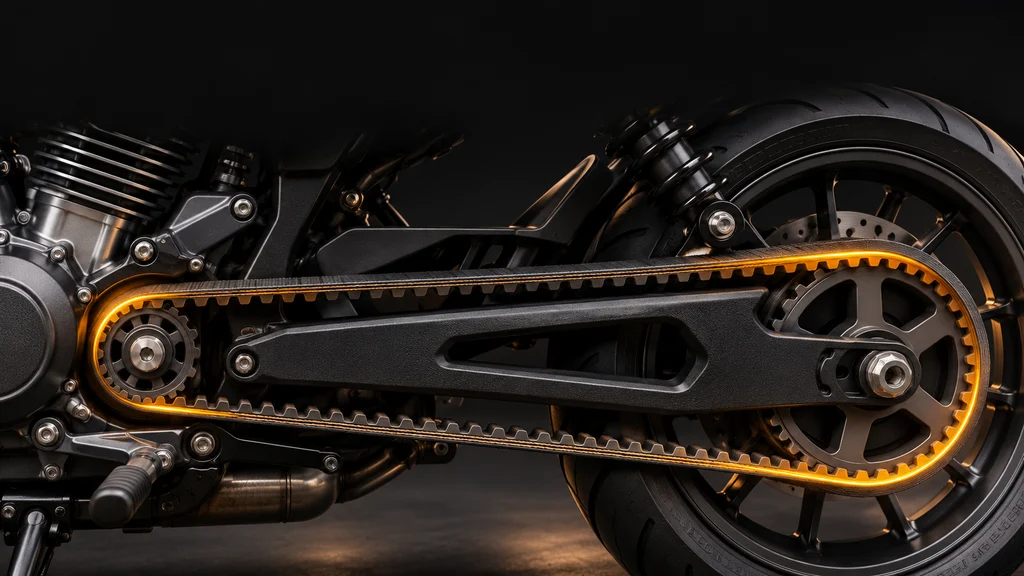
Belt drives are most often associated with certain Harley-Davidson models and with some touring and urban motorcycles. They are also used in continuously variable transmission systems on many scooters, where a belt runs between two variable-diameter pulleys to change ratio smoothly.
Advantages of belt drive:
- Requires no lubrication, which keeps the rear wheel and surrounding areas cleaner
- Quiet and smooth operation
- Lightweight compared with some alternatives and less likely to rust
- Less frequent routine maintenance than chains
Disadvantages of belt drive:
- Belts have a finite life and must be replaced at intervals set by the manufacturer
- Belt tension and pulley alignment must be correct, which can require specialist service
- Belts are sensitive to excessive heat, debris, and rapid changes in load
- Changing the final drive ratio is more limited than with chains or shafts
Shaft Drive: How It Works
A shaft drive uses a driveshaft, usually with universal joints or cardan-style couplings, to carry power from the gearbox to the rear wheel. At the rear, a set of bevel gears inside the final drive housing turns the power through a right angle to the wheel axle. The entire system is sealed and typically uses gear oil instead of frequent chain lubrication.
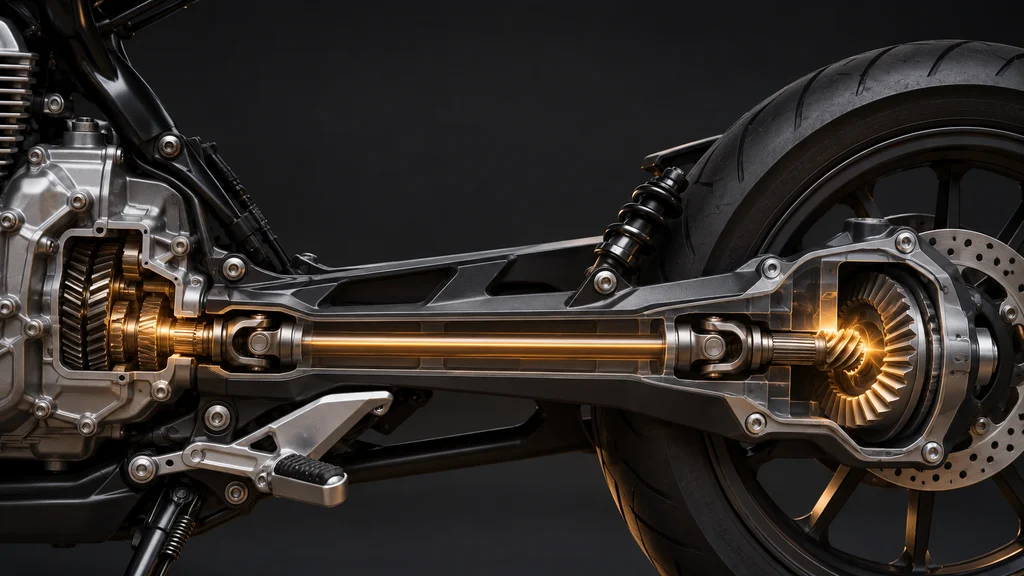
Shaft drives are common on touring motorcycles, some long-distance bikes, and certain boxer-engine models. They are also widely used in the automotive world, where propeller shafts and driveshafts are standard.
Advantages of shaft drive:
- Very low maintenance compared with chains, with mainly periodic gear oil changes
- Sealed design protects the drive from dirt, water, and road debris
- Long service life when the system is maintained properly
- Smooth, consistent power delivery with little noise
Disadvantages of shaft drive:
- Heavier than chain or belt systems, which can affect handling and unsprung weight
- Lower mechanical efficiency than chain drives, due to losses in the bevel gears
- Can cause shaft effect, where the drive reaction affects rear suspension behaviour during acceleration and braking
- More expensive to repair if the final drive fails
Other Drive Systems Worth Knowing
Beyond chain, belt, and shaft, several other arrangements are important in modern vehicles.
Continuously variable transmission (CVT) belts are common on scooters and some small motorcycles. A rubber or composite belt runs between two variable-width pulleys, allowing a smooth change of ratio without fixed gears.
Direct drive on electric motorcycles often removes the chain or belt altogether. A motor may connect directly to the wheel or through a simple single-speed reduction gear. This reduces mechanical complexity, though it changes how torque is delivered.
Hub motors on electric bicycles and some scooters place the motor inside the wheel hub. This removes the need for an external drive component, although it adds weight to the wheel.
Car drive arrangements include front-wheel drive, rear-wheel drive, and all-wheel drive. Each uses driveshafts, constant-velocity joints, differentials, and sometimes transfer cases. These systems are designed for stability, traction, and packaging efficiency in a car’s body.
Drive Systems for Cars vs Motorcycles
Cars and motorcycles have different requirements, so their drive systems are designed differently.
Cars carry more weight, use wider tyres, and need to manage space efficiently. Shaft-based systems suit cars well. They are durable, enclosed, and compatible with the suspension movement needed for comfort and stability. Front-wheel drive is common on compact and economy cars because it packages the engine and drivetrain together. Rear-wheel drive is often preferred for performance cars and trucks, and all-wheel drive adds grip on loose or slippery surfaces.
Motorcycles prioritise light weight, handling, and adjustability. Chain drives are popular on sport and performance bikes because they are light and efficient, and riders can change sprocket ratios. Belt drives suit riders who want low maintenance and a clean rear wheel, particularly for touring and urban riding. Shaft drives suit riders who cover long distances and want low routine upkeep, although they add weight and can affect suspension behaviour.
In short, cars generally favour enclosed shaft systems for durability and packaging, while motorcycles choose among chain, belt, and shaft based on riding style, maintenance preferences, and performance goals.
Pros and Cons at a Glance
| Feature | Chain | Belt | Shaft |
| Weight | Light | Light to moderate | Heavier |
| Efficiency | High | High | Slightly lower |
| Routine maintenance | High (lubrication, adjustment) | Low (periodic replacement) | Low (periodic oil change) |
| Noise | Can be noticeable | Quiet | Quiet |
| Ratio changes | Easy (swap sprockets) | Limited | Limited, depends on final drive |
| Protection from dirt | Lower unless sealed | Good | Excellent |
Common Misconceptions About Drive Systems
Several myths about drive systems can lead to poor buying decisions or incorrect maintenance.
Myth: Shaft drives are completely maintenance-free. They need less routine work than chains, but gear oil must be checked and changed at the intervals set by the manufacturer.
Myth: Belt drives never need attention. Belts do not need lubrication, but they must be inspected, kept at the correct tension, and replaced at the recommended interval.
Myth: Chain drives are unreliable. A well-maintained chain can last a long time. Most problems come from neglect, such as poor lubrication, incorrect tension, or worn sprockets.
Myth: Shaft drives are always superior. Shaft drives offer advantages in durability and low maintenance, but they are heavier and less efficient than chain drives in many cases. The best choice depends on use.
Myth: The drive type determines top speed on its own. Top speed depends on the engine, gearing, aerodynamics, and vehicle weight. The drive system contributes, but it is only one factor.
Pros and Cons of Each System in Practice in a nutshell
Chain drives reward riders who enjoy hands-on maintenance and want precise control over gearing. Their main drawback is the regular upkeep they demand, which can be a burden for busy riders.
Belt drives suit riders who want a clean, quiet, low-maintenance system, but they offer less flexibility in ratio changes and require replacement at intervals. Keeping them in good condition also means avoiding extreme heat and debris.
Shaft drives suit riders and drivers who travel long distances or prefer sealed, durable components. Their extra weight and drivetrain behaviour may not suit every rider, but they are very practical for touring and everyday use.
How to Choose the Right Drive System
Choosing a drive system comes down to how you use the vehicle. Commuters who ride in all weather may prefer a belt or shaft drive for reduced cleaning and protection. Enthusiasts who enjoy tuning and adjusting their bike may prefer a chain for flexibility. Touring riders who cover long distances often value the reliability and low upkeep of a shaft drive.
For cars, the choice of drive layout depends on the intended purpose. Front-wheel drive suits everyday use and fuel economy, rear-wheel drive suits performance and handling, and all-wheel drive suits varied road and weather conditions.
Conclusion
Drive systems determine how power reaches the wheels, and they shape a vehicle’s weight, feel, maintenance needs, and long-term costs. Chain drives offer lightness and adjustability, belt drives offer quiet and clean operation, and shaft drives offer durability and low routine upkeep. Cars rely mainly on shaft-based arrangements, while motorcycles choose among all three depending on purpose. The right choice depends on how you ride or drive, how much maintenance you want to do, and the kind of performance you value. Understanding these differences will help you choose a vehicle that suits your needs and maintain it properly for years to come.
Frequently Asked Questions
What is a drive system?
A drive system is the group of components that transfers power from the engine or motor to the driven wheels. It includes the transmission element, such as a chain, belt, or shaft, and the final drive.
Which drive system is most efficient?
Chain and belt drives are generally very efficient. Shaft drives are slightly less efficient because of losses in their bevel gears, although the difference varies by design and condition.
Which drive system needs the least maintenance?
Belt and shaft drives need less routine maintenance than chains. Belts require periodic replacement, while shafts require gear oil changes at set intervals.
Can you change the gearing on a belt or shaft drive?
Changing gearing is usually more limited on belt and shaft systems than on chain systems, which can be adjusted by changing sprocket sizes. Shaft and belt systems often rely on the final drive and pulley design.
Are chain drives noisy?
They can be, especially when worn or poorly lubricated. Proper maintenance and correct tension reduce noise.
Do cars use chains or belts for power delivery to the wheels?
Most cars use driveshafts, propeller shafts, and differentials rather than chains or belts to deliver power to the wheels. Chains and belts appear in other parts of a car’s engine, such as timing drives, but these are not used for wheel drive.